

How MSU students rethink immigration and migration in postwar Europe
March 30, 2026 - Kelly Smith
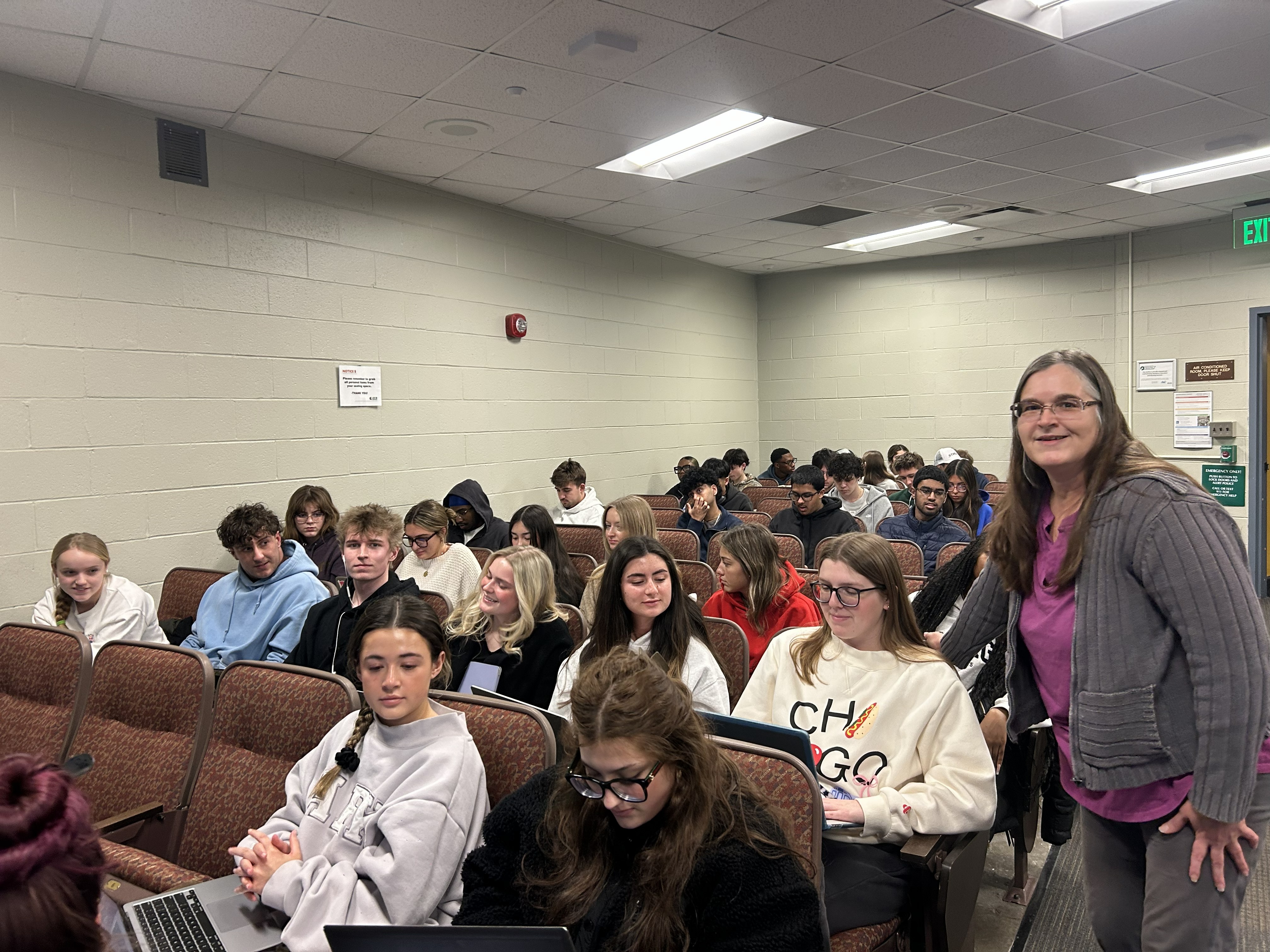 Immigration and migration are among today’s most debated social issues, and understanding them requires slowing down, looking back, and listening closely.
In ISS 230: Government and the Individual with a focus on Social Science Perspectives on Immigration to, and Migration Within, Post–World War II Europe, students are invited to rethink familiar narratives by examining Europe’s postwar migration histories from multiple social science perspectives. We talked to the professor behind the course, Dr. Marcie Cowley, about what students gain by looking beyond the headlines.
What inspired the creation of this course?
I have always been interested in the human stories behind migration. Migration studies (with a focus on Europe) was one of my fields of graduate history studies.
At the time that I was developing this course, the refugee crisis from the Syrian war had been in the news near daily for months. One of the goals of an Integrative Studies in Social Science course is to identify established disciplinary ways of knowing within the social sciences and to integrate these perspectives and methods around complex social issues. Migration and immigration are complex and significant social issues that are studied by many disciplines within the social sciences. Sometimes when we read or hear about these issues, the very real human stories are lost. I wanted to inspire students to reflect on migration through an interdisciplinary lens to understand there are often complex push and pull factors (sometimes voluntary and sometimes forced) behind the news bites.
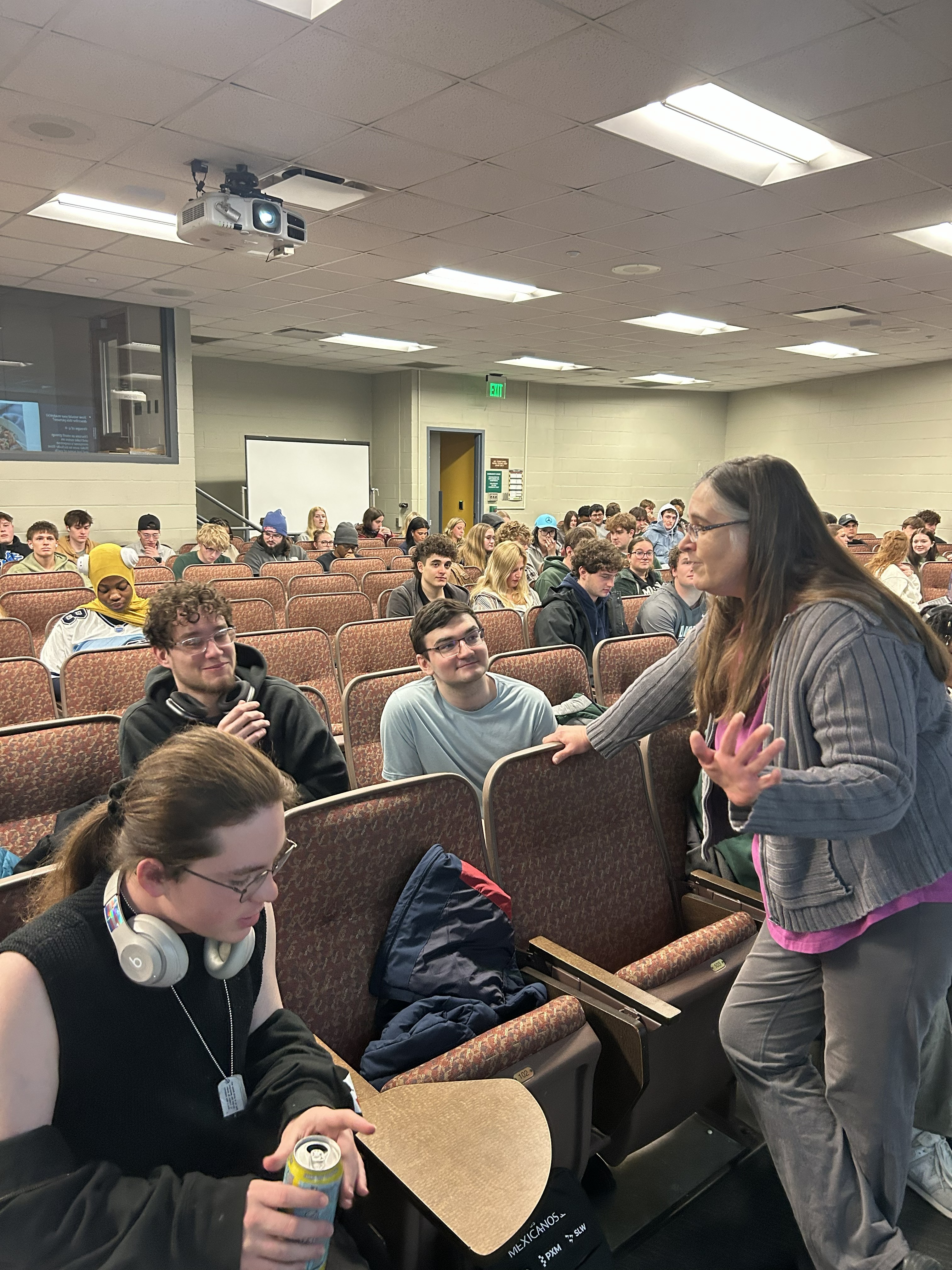 How do you help students rethink common narratives about immigration and the intra‐European movement in the postwar era?
I start by introducing students to how drastically Europe changed demographically in the postwar era. It has become a continent of immigration, a development that has often preoccupied European leaders and civilians. Using Europe as a focus allows students to gain insight into how multiple governmental levels attempt to control or influence migration policies from the European Union (a supranational organization) to nation states to regional and sometimes even local governments.
What do social science perspectives (across history, sociology, anthropology, geography, or political science) reveal about migration that students might miss from a single‑discipline lens?
A single disciplinary lens comes with much narrower insight into the complexities of migration. For example, an economist may favor migration as a way to promote competition in the job market and avoid wage inflation whereas an early child education professional might be concerned with overcrowded schools and support for children who do not speak the language of the receiving country. Politicians would understandably be concerned with their constituents’ reactions to immigration. Geographers would be attentive to issues of social segregation in neighborhoods that might result with immigration, and anthropologists would strive to capture the lived experiences of migrants as they adjusted to their lives in a new country.
How do you help students connect postwar migration histories to the debates and movements shaping Europe today?
I want students to understand that different countries in Europe have different histories with imperialism. Some were the colonizers; other countries’ populations were subjugated by other Europeans. From the guestworkers brought into West Germany to rebuild the country, to the post-colonial migrations to the United Kingdom and France with decolonization, each European country has addressed the issue of immigration and migrants differently. Some countries promote policies of multi-culturalism, while others insist on a particular path of assimilation of immigrants. In European countries that have had relatively high levels of immigration in the postwar era, the issue has become highly contested and politicized.
What do you hope students take away from this course?
Another goal of ISS courses is to encourage students to expand their personal perspectives around shared and complex problems to better understand and include the diverse perspectives of others. The course has undergone many revisions and, in its current form, I have several interactive content and skills building activities and group workshops. My goal is to facilitate a space where students can learn from each other and dialogue across divides about complex social issues such as migration and immigration.
This is the sixth in a series about interesting ISS courses taught through MSU’s Center for Integrative Studies. Next up: Cultural Studies with Purpose: Documentary Filmmaking in Lansing with Dr. Eddie Boucher, coming in April.