

A.J. Harris Scholarship supports GLIS student’s immersive summer in Japan
February 3, 2026 - Kelly Smith
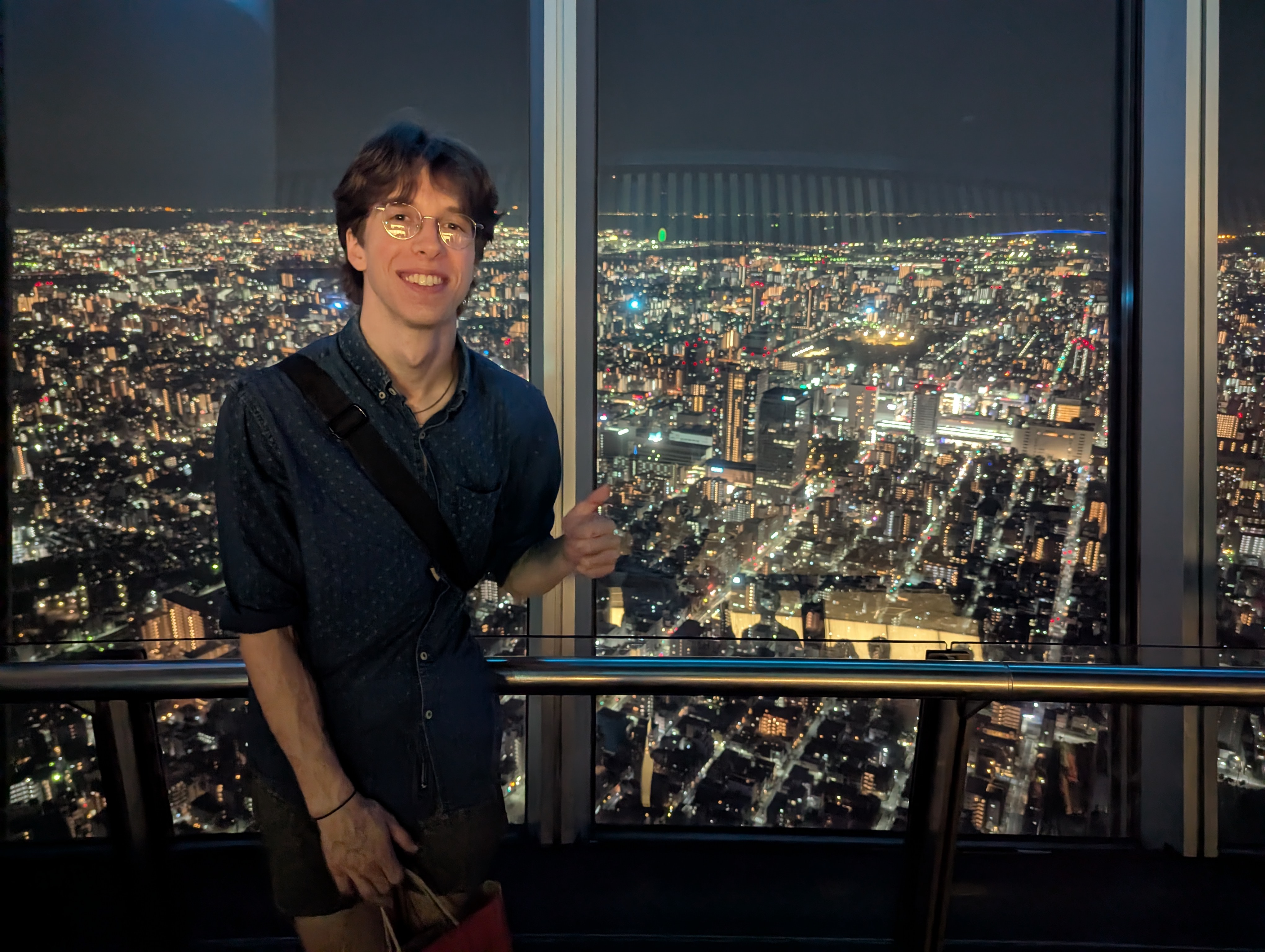 When Josef Bulko arrived in Japan for an intensive summer language program, he expected the coursework to be demanding. What he didn’t expect was how quickly the experience would sharpen his academic focus and solidify a long-term curiosity that has continued to grow ever since.
Bulko, a senior Global and International Studies in Social Science (GLIS) major, spent two months in Japan studying Japanese language at the 400 level through the Japan Center for Michigan Universities, a program that pairs rigorous instruction with opportunities to learn beyond the classroom. The experience was made possible with support from the A.J. Harris Field Experience Scholarship, which helps GLIS and Interdisciplinary Studies in Social Science (IDS) students pursue real-world learning opportunities for credit.
A scholarship that felt “made for my major”
Bulko applied for the A.J. Harris Scholarship because it felt tailored to students like him—students whose majors are intentionally interdisciplinary, but sometimes less visible in the broader scholarship landscape.
“Within MSU's College of Social Science, there are a lot of scholarships,” he said. “But for students who do IDS or GLIS, those are such small and unique majors, it’s different than a student in economics or psychology, for example. I didn’t feel like there were a ton of scholarships out there for us.”
What stood out to him wasn’t just that the scholarship supports IDS and GLIS students, but the story behind it.
A.J. Harris II, a 1965 graduate of the IDS program, established the scholarship to help students gain meaningful field experience. “The idea of the legacy of the integrative studies program, that really stood out,” Bulko said.
When Bulko found out he had been selected as a recipient, his reaction was a mix of surprise and pride.
“I’m always surprised when I hear teachers recommend me for things or compliment my performance… I’ve never considered myself a distinguished student. I was grateful. I was proud of myself.”
One of the most meaningful parts of receiving the scholarship is what it represents: an alum investing in students he may never meet because he believes in the lasting value of experiential learning.
“People who are generous enough to leave endowments behind for people they’ll never know do it because they believe in something greater than themselves. That means a lot to me.”
Language study meets cultural immersion and research
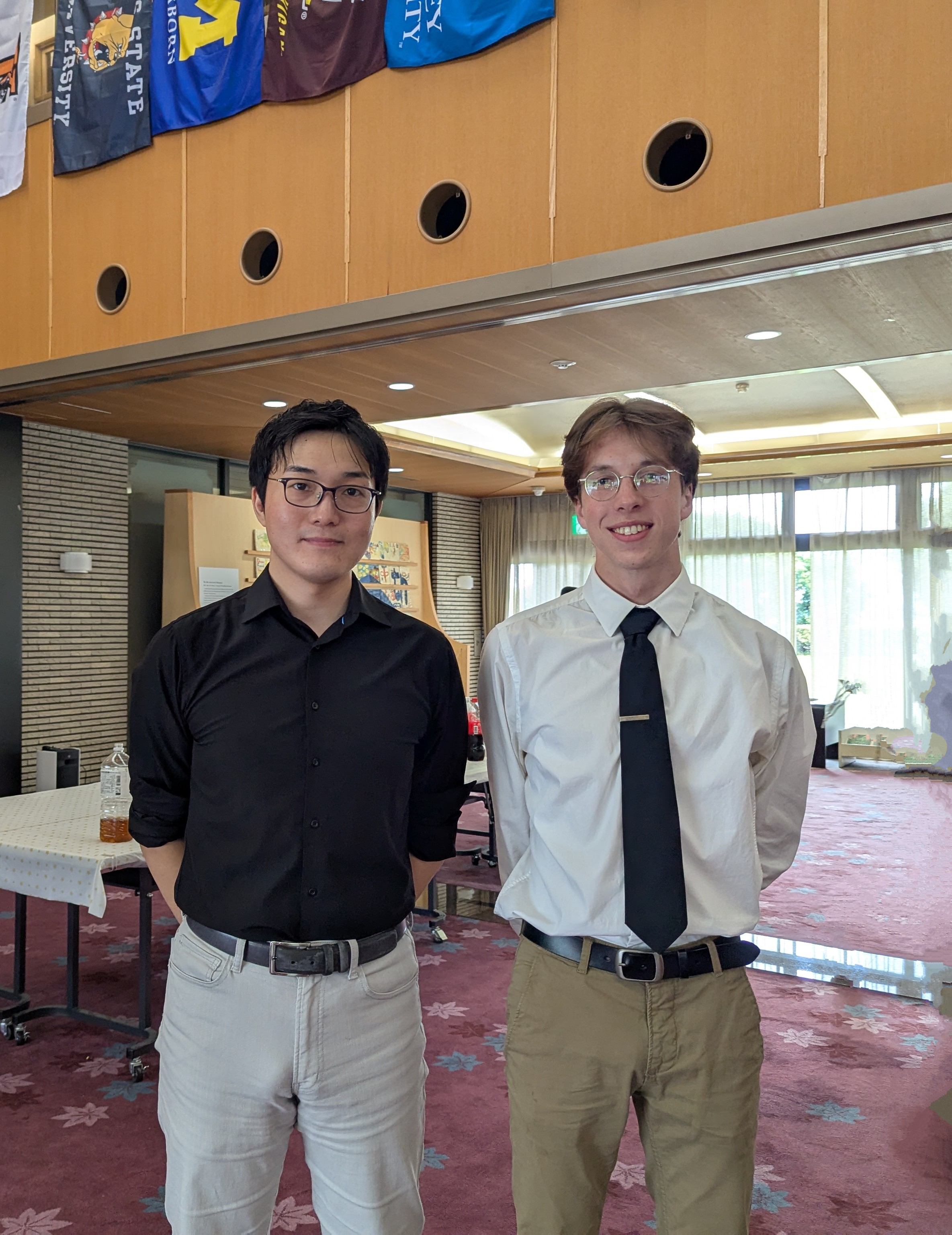 Bulko’s summer program took place in Shiga Prefecture, about 40 minutes from Kyoto, where the academic pace was intense. “It was a very difficult program in regard to academics and the rigor,” he said.
The program did offer regular opportunities for cultural immersion to help students engage more deeply with the community. Bulko participated in zazen (meditation), practiced calligraphy, experienced a tea ceremony, visited temples, and traveled to nearby cities.
Those moments weren’t just “extras.” They helped reinforce why experiential learning matters. “I was glad that this trip was both academic and experiential. And I think it really is a good example of what field experience can and should be.”
While in Japan, Bulko worked on his end-of-program qualitative research project: examining attitudes toward immigration in Japan, a topic connected to the country’s demographic challenges.
That research didn’t end when Bulko returned to Michigan.
Since that summer, he has further explored migration, identity, and belonging. In his capstone project, Bulko extended his focus by exploring Americans who move from the United States to Japan.
From those projects emerged a lasting interest: “I developed a curiosity and a pretty deep interest in human migration as a whole,” he said, noting how migration intersects with the human challenge of living together across differences.
Why interdisciplinary learning matters
Bulko’s path to GLIS started with a goal that predated college: he had long wanted to live and work in Japan for part of his life. But he didn’t arrive at MSU with a narrow plan for how to get there.
He chose GLIS because its interdisciplinary design offered both flexibility and intention, qualities he had already come to see as essential in higher education. He noted that even students and professionals in more traditional disciplines often point to the integration of multiple fields as critical to their success, and something employers are actively seeking.
That flexibility, he said, has been especially important. The GLIS major has allowed him to combine social science coursework with advanced Japanese language study while shaping an academic experience that reflects how his interests have evolved.
“It really allowed me to curate my experience here at MSU,” he said.