

How MSU Students Explore Happiness Across Disciplines
January 15, 2026 - Kelly Smith
 Feeling happy sounds simple—but it’s one of life’s biggest challenges.
That’s exactly what students examine in ISS 210: The Pursuit of Happiness, an interdisciplinary exploration course taught by Dr. Brandy Ellison. From writing gratitude letters to mapping awe-inspiring spots on campus, this class blends science, philosophy, and hands-on practice to help students discover what really makes life meaningful.
What inspired the creation of this course?
At the recommendation of a colleague, I recently completed a one-year certificate in happiness studies, which is an interdisciplinary field. Through that process, I came to see that the pursuit of happiness is relatively easy to understand, but hard to implement. Knowing that undergraduate students have reported increased rates of loneliness, anxiety, depression, and other health concerns in recent years, I thought many students would benefit from exposure to this information and opportunities to practice the strategies.
How do you personally define “happiness,” and how does that definition shape the course?
In the class, we distinguish between happiness as a feeling of pleasure you have in specific moments and the pursuit of happiness via working toward a life characterized by purpose, meaning, and joy. We often think what we want is that feeling of pleasure but, paradoxically, that does not lead to long-term happiness because it is not sustainable or fulfilling. Rather than pursuing happiness directly—which often fails—we learn strategies for developing the sense of purpose, intellectual wellbeing, physical wellbeing, relationships, and emotional health that can result in happiness. 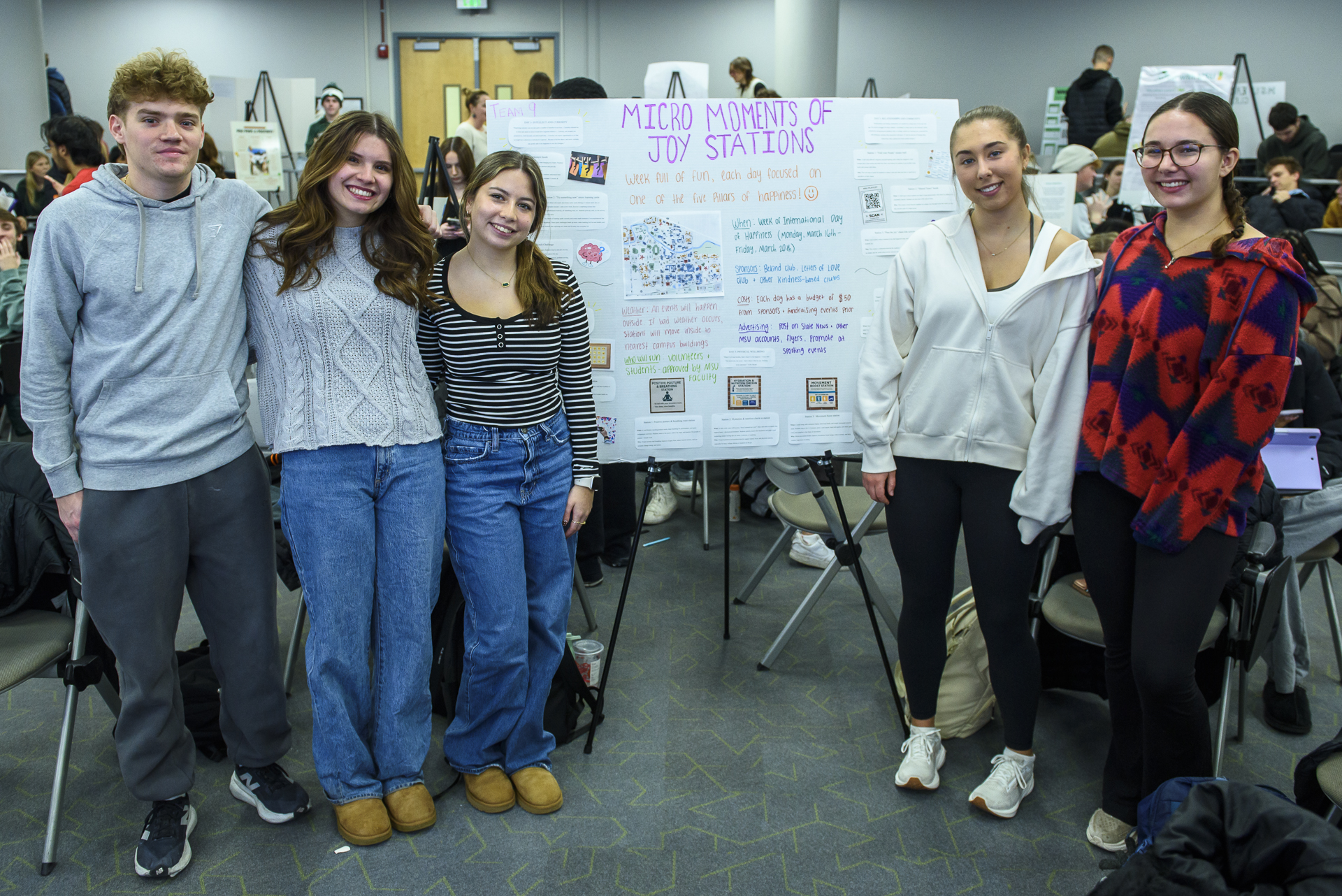
The course description mentions an interdisciplinary understanding. What disciplines or perspectives does the course draw from?
As you might expect, psychological research and theories inform large portions of the course. We draw on additional social sciences, including sociology and economics. Neuroscience, nutritional science, physiology, and similar disciplines inform our explorations as well. We engage with philosophical debates about the meaning of happiness and how to achieve it. And we explore literature and music to see both what they can tell us about happiness and how engagement with art might help us achieve happiness. Plus more!
How do you balance theory and practice in helping students pursue happiness?
I try to find a way for students to practice almost everything we discuss in class. When we learn about the value of boredom, we spend 10 minutes in class doing nothing. When we learn about the benefits of experiencing positive emotions, we write a letter of gratitude and deliver it to someone who has positively impacted us. When we talk about the eight wonders of life that are the primary sources of awe, we create maps of MSU’s campus directing fellow students to opportunities to experience awe. The theories are of no particular use without opportunities to rehearse, practice, or engage with them in real life.
Why do you think the pursuit of happiness is such a timely topic for students today?
I don’t know that it is. Given the long history of explorations of the concept of the good life—dating back to Aristotle—it is a topic of perennial interest. And college courses on happiness have been popular for several years. There are arguments that contemporary society in the U.S.—among other places—encourages us more than ever to live in a way that is antithetical to the pursuit of happiness, but many of those are exaggerated in the popular mind.
How does this course fit into the broader goals of the ISS curriculum?
The general learning outcomes for ISS courses are that students will be able to:
-
Identify established disciplinary ways of knowing within the social sciences and integrate these perspectives and methods around complex social issues.
-
Expand their personal perspectives around shared and complex problems to better understand and include the diverse perspectives of others.
-
Identify ways to use social scientific thinking to positively affect their own lives, their local and global communities, other disciplines, and/or their career fields.
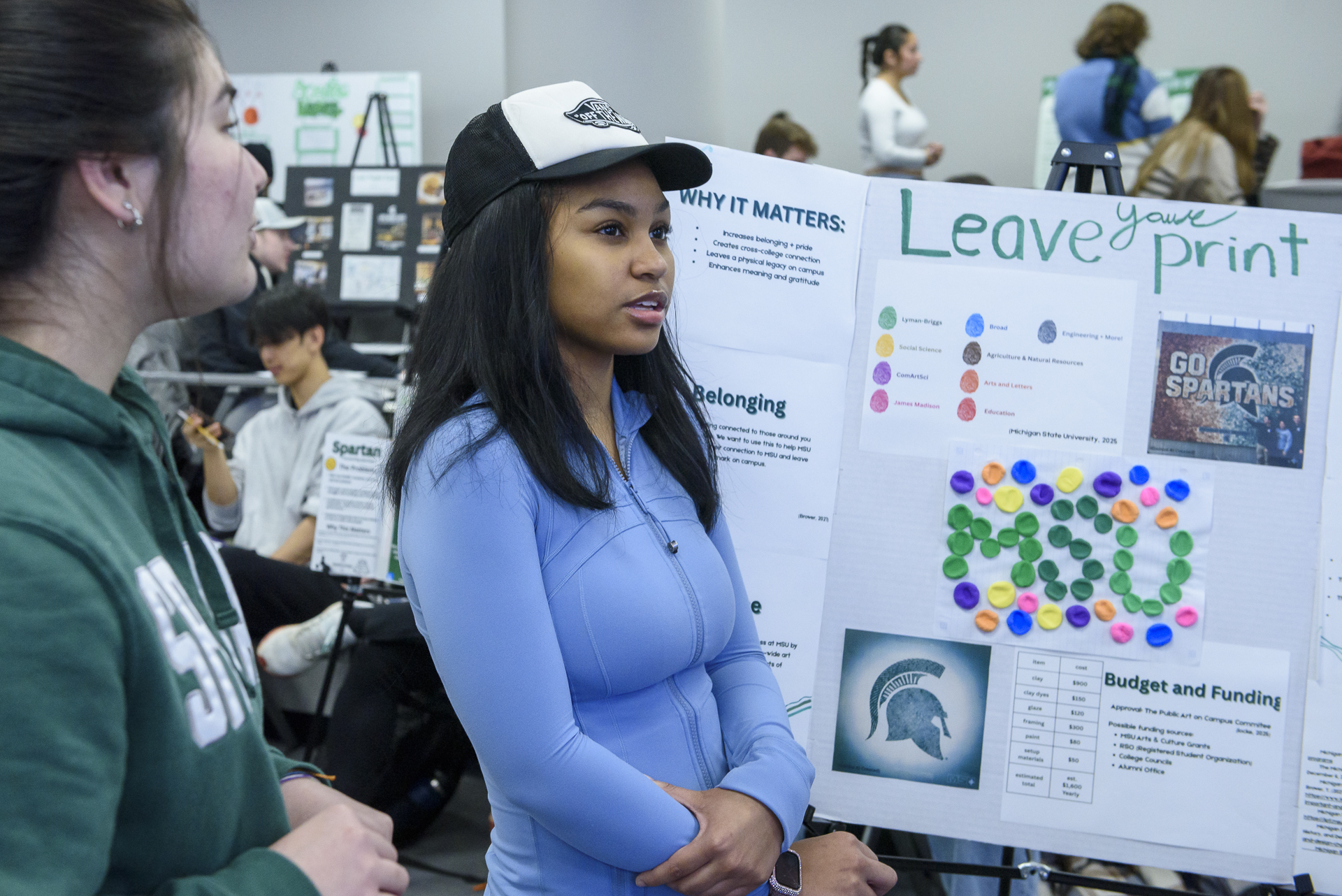
We address all of these in class via explorations of the five pillars of the pursuit of happiness, exploring happiness as a societal wicked problem, and developing proposals for making MSU a happier place.
How do you encourage students to think about happiness not just for themselves, but for others?
Ultimately, the pursuit of happiness is outward-focused, not inward-focused, so this tends to happen naturally. It requires getting out of your own head, finding a purpose, and developing meaningful relationships. Their final project is to design a plan to make MSU a happier place so it has a fundamental focus on facilitating happiness for others. And, as the happiness researcher Arthur Brooks says, “The greatest gift that you can give to people around you is to work on your own happiness.”
If you could describe the course in one sentence, what would it be?
Don’t store your life in the future; your life is happening right now, all around you.
What do you hope students will remember about this course five or ten years from now?
If they can remember the five pillars of the pursuit of happiness—sense of purpose, intellectual wellbeing, physical wellbeing, relationships, and emotional health—they will always be able to identify tools and practice strategies to further their pursuit of happiness and a meaningful life.
See more photos of the students final poster presentation by viewing our album on Facebook.
This is the fourth in a series about interesting ISS courses taught through MSU’s Center for Integrative Studies. Next up: Society and the Individual — Animals and Society with Dr. Seven Mattes, coming in February.