

Sandy Burnley receives 2026 ISS Teaching Excellence Award from MSU’s College of Social Science
May 11, 2026 - Kelly Smith
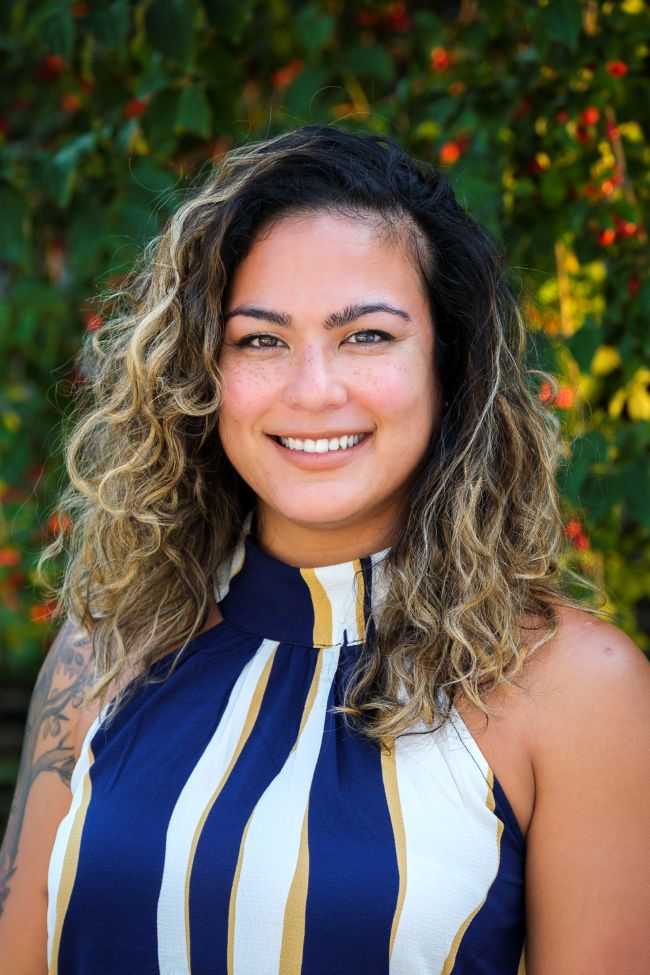
The College of Social Science has awarded Sandy Burnley, assistant professor in the Center for Integrative Studies in Social Science, with the 2026 Integrative Studies in Social Science (ISS) Teaching Excellence Award. The award recognizes outstanding dedication to student learning, an innovative approach to teaching, and a lasting impact on the intellectual and personal development of students.
That impact is consistently reflected in the experiences of her students. Through immersive classroom practices and a strong commitment to creating supportive, student-centered learning environments, Dr. Burnley has become a formative presence in many students’ academic journeys, helping to shape their intellectual growth, confidence, and sense of belonging.
Jessica Zhang, a senior nursing major, describes Dr. Burnley as “an exceptional professor” whose influence extends far beyond the classroom. “She really ingrained in me that I am absolutely capable of making change and that it can start in as small of a community as the people around me,” Zhang shared.
“As a student, I always felt comfortable sharing my beliefs and experiences, no matter the perspectives that others held because she affirmed to us that this enriches our education and people can respect one another,” continued Zhang. She credits Dr. Burnley’s encouragement and advocacy as foundational to her success, adding that “her unwavering compassion” helped students feel valued and empowered, even in moments of self-doubt.
Dr. Burnley’s teaching philosophy centers on inclusivity, community, reciprocity, and accountability, particularly in large lecture settings and when engaging with complex topics. She strives to create learning environments where students feel respected and seen as they navigate challenging conversations. She has also adapted her approach to emphasize trust, curiosity, and shared responsibility rather than anonymous participation.
“I have noticed more peer-to-peer support burgeon in the classrooms, and less fear of asking questions,” noted Dr. Burnley.
Colleagues also point to her collaborative approach and her ability to connect classroom learning to lived experience.
“Over the last two years, I worked closely with Dr. Burnley, and I have witnessed her collaboration firsthand as we designed workshops for her ISS classes,” said Thuy‑Tram Nguyen Butler, senior specialist of curriculum development in the College of Social Science. “She is a firm believer in the decolonization of her classroom; she designs her curriculum to first ensure students understand concepts, then slowly, and thoughtfully introduces new ideas.”
Through guest speakers, varied perspectives, and applied learning beyond the classroom, Dr. Burnley encourages students to engage deeply with course concepts and with one another across differences. Butler noted that this approach allows students “to not only learn but also learn through their own lived experiences and share their thoughts and perspectives with other students.”
At the heart of this approach, Dr. Burnley is committed to building an unforgettable learning experience and designing courses that extend beyond traditional classroom structures. Her work, she hopes, will help immerse students in an ethic of care, community, and sustained collaboration.
“She has always tried to ensure that her students understand that everyone matters, even when I felt like I didn’t, and that everyone can make an impact, even when I felt like I couldn’t,” said Zhang.
“Thank you, Dr. Burnley, for teaching me to embrace my individuality and showing me that who I am is my biggest superpower.”